
The AI Operating System for Physical Work.
Praxis guides frontline teams through physical work, verifies that it was done correctly, and learns from every execution.
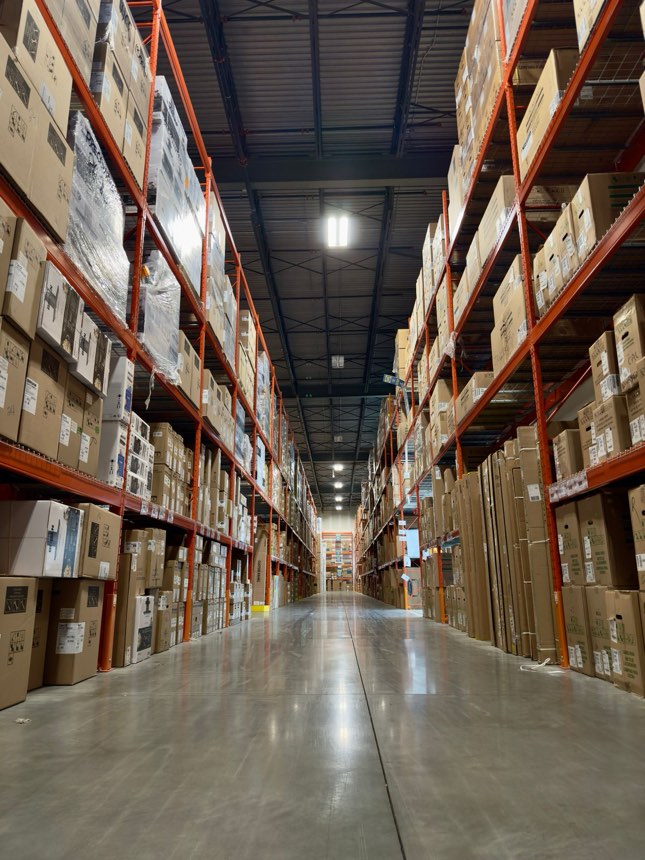
Every job generates experience. Almost none of it makes the next one better.
Physical operations don't learn from the work being done.
Mistakes are discovered after the fact. Best practices stay in people's heads. The same problems get repeated.
- // 01
“I can't watch everyone.”
Mistakes are discovered after the work is already done.
- // 02
“I find out too late.”
The system records the transaction, not how the work was performed.
- // 03
“When someone experienced leaves, their knowledge leaves too.”
What workers learn rarely makes its way back into the next job.
Praxis turns physical work into a learning loop.
All of it happens while the work is happening — not in a report afterwards, when the job is already done and the pallet has already shipped.
- // 01
Guide
Help the worker know what needs to happen. A new hire gets the same direction your best supervisor would give, at the moment they need it.
- // 02
Observe
Understand the work as it happens — every step and every hand-off, on every shift, without anyone having to write it up afterwards.
- // 03
Verify
Determine whether the outcome is correct, while it can still be fixed. A deviation surfaces the moment it happens, not when the customer calls.
- // 04
Improve
Use what was learned to make the next execution better — so the fix outlives the shift, and the person who worked it out.
Every verified execution makes the next one better.
Operational Memory learns from every verified execution.
Praxis doesn't just record what happened. It uses verified execution to improve what happens next — so the operation gets better at the work the more work it does.
- ERP / WMS
- Records transactions
- Praxis
- Remembers execution
- // 01Guide
- // 02Observe
- // 03Verify
- // 04Improve
Start with the operation you already have.
Same people. Same equipment. Same systems. Praxis adds the intelligence that helps them execute better.
Same people
The team you already have, doing the work they already do — with guidance while they do it.
Same equipment
No robots to buy and no new barcodes to apply. Praxis reads what is already on the floor.
Same systems
Your WMS and ERP stay where they are. Praxis reads the order and writes back what actually happened.
Live in weeks
Start in one area, prove it there, and expand from what worked. Not a twelve-month programme.
Teams move execution from assumed to verified — and see fewer errors, higher throughput, and hours back every week.
- ~40%
- Fewer errors, week one
- 120→10
- Weekly hours spent chasing what happened
- $140k+
- Saved per year
- Weeks.
- To go live, not months
Check it against your own numbers.
The defaults describe a mid-size operation. Put your own numbers in — the ones you already argue about on Monday — and see what verification is worth at your volume.
- 624
- Errors caught before they compound, a year
- $74,880
- Recovered from rework and claims
- 2,080 hrs
- Handed back to your team, a year
Figured at 40% fewer errors — what teams see in week one — and time spent chasing what happened falling to about 10 hours a week, across 52 weeks. Change any number; the case holds.
Starting with warehouse & distribution operations.
It is where a mistake costs the most and where the loop closes fastest — so it is where we started, and where Praxis runs today.
See Praxis for 3PL & wholesale distribution- Receiving
- Fulfillment
- QA
- Cycle counting
- Put-away
- Returns
Built for physical work, not just warehouses.
Manufacturing · Field service · Retail operations · Industrial inspection
Sits on top of the systems you already run.
Praxis reads your orders and item data, and writes verified execution back. Your existing systems stay where they are — no rip-and-replace, no new barcodes, no change to how your team works.






Plus flat-file and API feeds for anything else you run.
Built by people who've built the systems behind physical work.
- Enterprise software + physical operations
- Robotics + human-machine interfaces
- Autonomy + perception
 Briggs Rajagopalan
Product leader at Block (Square), Adobe, Levi Strauss and Abercrombie & Fitch, building omni-channel and mobile commerce for big-box retail. Ohio State.
 Anuj Natraj
Built AR/VR systems that trained and guided the Indian Armed Forces — the same problem Praxis solves on the floor. Patent holder in multi-sensor fusion. Siemens; M.S. Robotics, Northwestern.
 Nader Ahmed
Robotics engineer in computer vision and physical-world autonomy, who led Department of Energy–funded perception work in unstructured environments.
Where the team has built








Questions we get asked first.
// 01What is Praxis?
Praxis is an AI operating system for physical work. It guides frontline teams through a job, understands the work as it happens, verifies that the outcome is correct, and uses what it learns to make the next job better. The result is an operation that improves at the work the more work it does.
// 02How is this different from our ERP or WMS?
Your ERP or WMS records the transaction — what was ordered, what was booked, what was shipped. It does not capture how the work was actually performed, so nothing about one job improves the next. Praxis sits on top of those systems and adds the missing layer: guidance while the work happens, verification that it was done correctly, and a memory of every verified execution that makes the next one better.
// 03Is this workforce monitoring?
No. Praxis is built to help workers succeed at the job in front of them, not to score them. It gives a new hire the guidance your best supervisor would give, catches a mistake while it can still be fixed rather than after it has shipped, and keeps what the team learns so it does not leave when someone does. The operation gets confidence that work was done correctly; the worker gets help doing it right the first time.
// 04Do we need robots, new barcodes, or a change to our process?
No. You start with the people, equipment and systems you already have. Praxis reads what is already on the floor, so there is no relabelling and no extra scan step, and it requires no layout changes to get going.
// 05How long does it take to go live?
Weeks, not months. Teams typically start in one area, prove the result there, and expand from what worked, rather than committing to a long programme up front.
// 06Which operations is Praxis built for?
Praxis runs today in warehouse and distribution operations — receiving, fulfillment, QA, cycle counting, put-away and returns — where a mistake is most expensive and the learning loop closes fastest. The architecture is built for physical work generally, and extends to manufacturing, field service, retail operations and industrial inspection.
Do more with the team you already have.
Help every worker perform at their best, while giving the operation confidence the work was done correctly. Book a demo and we'll walk the workflows where errors cost you most.